Magnesium Metal
Magnesium is an essential chemical element or alkaline earth metal of group 2 in the periodic table with symbol Mg and atomic number 12. It is a silvery white and lightweight metal that is used for improving the mechanical, fabrication, and welding characteristics of aluminium. Magnesium is an essential chemical element for living beings (plants and animals) and modern industry. Chlorophyll in green plants contains a single atom of magnesium at its centre.
The silvery-white, lustrous, and relatively soft magnesium metal ignites easily in air with a bright light. However, it is much harder than sodium metal because two electrons per atom are available for metallic bonding. The melting point of magnesium is also higher than that of sodium for the same reason.
Occurrence
Magnesium is the eighth most abundant chemical element in the Earth’s crust and the third most dissolved element in seawater after sodium and chlorine. The elemental form of this metal does not occur in nature due to its high reactivity. It is widely deposited in the sedimentary rocks dolomite (MgCO3+CaCO3), carnallite (KCl, MgCl2, 6H2O), and magnesite (MgCO3).
Besides these, a large number of silicates also occur in nature. These are soapstone (talc), asbestos, and the micas. A large amount of this alkaline earth metal is also believed to be present in the mantle of the Earth (olivine)
It is likely to be observed that magnesium minerals separate in the early stages of the crystallization of magma. Therefore, it is accommodated in the sedimentary rocks of our Earth’s crust. A huge quantity of Mg present in seawater generally comes from the leaching of such rocks.
Each year, we can produce millions of tonnes of magnesium metal from Earth’s oceans. Therefore, the major supply of Mg metal now comes from seawater. A pure form of this alkaline earth metal can be prepared generally by reducing MgO with silicon or by the electrolysis of molten MgCl2.
Isotopes of Magnesium
Magnesium has three stable naturally occurring isotopes (24Mg, 25Mg, and 26Mg) present in significant amounts in nature.
Mg also has several radioactive isotopes with mass numbers ranging from 20 to 34. Among these, radioisotope 28Mg was produced in several nuclear power plants and used in various scientific experiments.
Discovery of Magnesium
Joseph Black at Edinburgh in 1755 was the first person to say that magnesium was an element. He first differentiated magnesia (MgO) from lime (CaO). However, both these compounds were obtained during heating similar kinds of carbonate rocks (magnesite and limestone).
Another kind of mineral meerschaum (magnesium silicate) was reported in 1789 by Thomas Henry. During this time, it was widely used for making pipes for smoking tobacco.
An impure form of magnesium was produced first in 1792 by a Hungarian chemist Anton Rupprecht when heating magnesia with charcoal. However, a small amount of pure form of this metal was obtained in 1808 by British chemist and inventor Humphry Davy during the electrolysis of magnesium oxide.
A requisite amount of magnesium was first produced in 1831 by the French scientist, Antoine-Alexandre-Brutus Bussy. He prepared it by reacting MgCl2 with potassium, and then studied the properties of magnesium metal.
Production Process
Calcium and magnesium compounds were known from ancient times. A soft white stone (talc) available in the Magnesia district of Thessaly was named Magnesian stone. Today, magnesium metal is generally produced by electrolysis, silicothermal reduction, or an ion exchange process.
Electrolytic Method
In the electrolytic method, a fused anhydrous mixture of magnesium chloride + calcium chloride + sodium chloride (MgCl2 + CaCl2 + NaCl) is electrolysed at 750 °C using an iron cathode and graphite anode in an inert atmosphere.
Magnesium is the least electropositive among calcium and sodium metals. Therefore, it is deposited alone at the cathode during electrolysis of this mixture.
Silicothermal Process (Pidgeon Process)
The Pidgeon process (silicothermal process) for the production of magnesium metal is used primarily in China. The oxide of this metal or calcinated dolomite (CaO, MgO) is heated with ferrosilicons at about 1150 °C in steel alloy retorts.
2 (CaO, MgO) + FeSi → 2Mg + Fe + CaO, CaSiO3
High vacuum is maintained during the distillation of vaporized Mg. The valopur form of magnesium then condenses as pure metal crystals.
Ion Exchange Process
Magnesium in seawater may be enriched by ion exchange through calcinated dolomite (CaO, MgO). The replacement of Ca+2 by Mg+2 is carried out because Mg(OH)2 is less soluble than Ca(OH)2.
Ca(OH)2, Mg(OH)2 + Mg+2 → 2Mg(OH)2 + Ca+2
The Mg(OH)2 obtained through ion exchange may be heated to give MgO. In the last step, carbon reduction of MgO at 2000 °C gives magnesium metal.
MgO + C → Mg + CO
The metal is deposited by rapidly cooling the product to about 200 °C and dilution with hydrogen or natural gas. Some MgO is still formed. The metal is then purified by redistillation in a vacuum.
Properties
Magnesium is a shiny gray, lustrous alkaline earth metal that has two-thirds the density of aluminium. It is harder than the alkali metal sodium. The elemental form of this metal does not exist in nature due to its high chemical reactivity.
Such metal has the lowest melting and boiling points among the alkaline earth metals. Although Mg is oxidized in air but can not needed to create iner atomsphere for its storage due to the formation of a protective oxide layer.
Discovery and Physical Properties |
|||
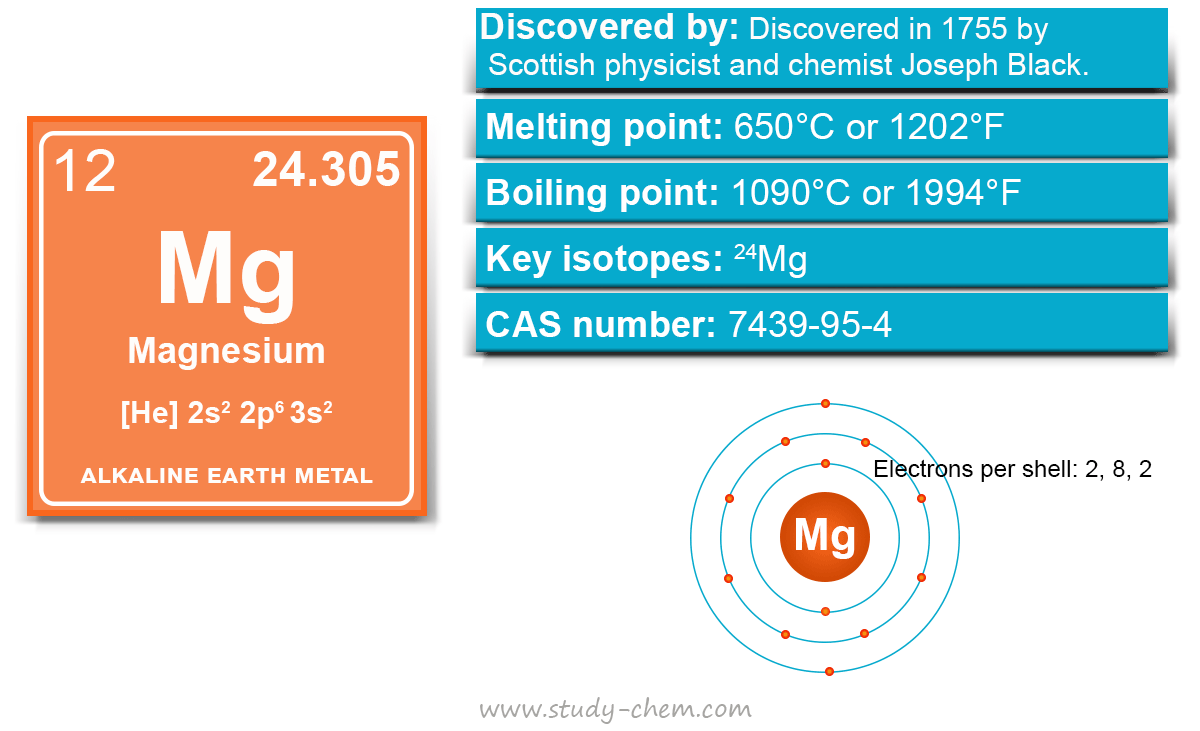
| Discovery | Discovered in 1755 by Scottish physicist and chemist Joseph Black. | ||
| Origin of the name | The name of the metal magnesium originates from Magnesia, a district of Eastern Thessaly in Greece. | ||
| Allotropes | Mg | ||
| CAS number | 7439-95-4 | ||
| Relative atomic mass | 24.305 | ||
| Atomic number | 12 | ||
| Electron configuration | [He] 2s² 2p⁶ 3s² | ||
| Periodic position | Group 2, period 3, and block s in the periodic table. | ||
| Melting point | 650°C or 1202°F | ||
| Boiling point | 1090°C or 1994°F | ||
| Density (g cm−3) | 1.74 (~2/3 of aluminum, 1/4 of steel) | ||
| State | Solid at 20°C | ||
| Crystal structure | Hexagonal close-packed (hcp) | ||
| Key isotopes | 24Mg | ||
| Thermal conductivity | 156 W/(m⋅K) | ||
| Electrical Conductivity | 22.4 × 10⁶ S/m | ||
| Molar heat capacity | 24.869 J mol−1 K−1 | ||
| Specific heat capacity | 1023.205 J kg−1 K−1 | ||
Chemical Properties |
|||
| ChemSpider ID | 4575328 | ||
| Atomic radius, non-bonded (Å) | 1.73 | ||
| Covalent radius (Å) | 1.40 | ||
| Electron affinity (kJ mol−1) | Not stable | ||
| Electronegativity (Pauling scale) | 1.31 | ||
| Ionisation energies (kJ mol−1) |
1st | 2nd | 3rd |
| 737.75 | 1450.683 | 7732.692 | |
| Common oxidation states | +2 | ||
| Magnetic ordering | Paramagnetic | ||
Chemical Reactivity
Magnesium is chemically reactive and reacts vigorously with oxygen and water. This alkaline earth metal reacts slowly with cold water but vigorously with hot water or steam by releasing hydrogen gas.
Mg (s) + 2H2O(l) → Mg(OH)2 + H2 (g)
Mg (s) + H2O (g) → MgO (aq) + H2 (g)
However, it forms a thin passivation coating of magnesium oxide when exposed to the air and prevents further corrosion under normal conditions. A finely divided powder or ribbon can ignite readily with the formation of a brilliant-white light. Such a property of this metal make suitable for use in fireworks and flares.
Mg is also dissolved readily when placed on mineral acids with the evolution of hydrogen gas. It reacts with nitrogen to form magnesium nitride (Mg3N2).
Mg forms a large number of organometallic compounds. Cyclopentadienyl compounds are also known for this metal. Alkyl magnesium halides or Grignard reagents are common and widely used organometallic halides of this metal used in organic synthesis.
Position of Magnesium in Periodic Table
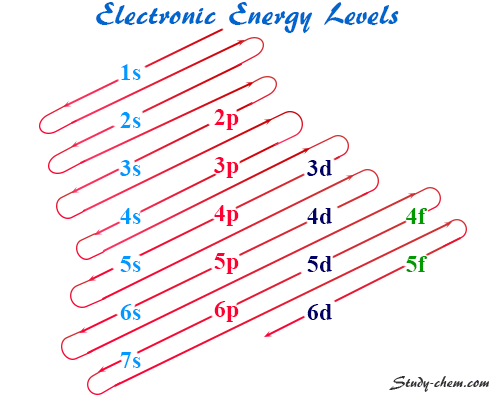
The atomic number of magnesium is 12, and the electronic configuration of the element is [He] 2s² 2p⁶ 3s². Therefore, alkaline earth metal magnesium is positioned in group 2 and period 3 of the periodic table.
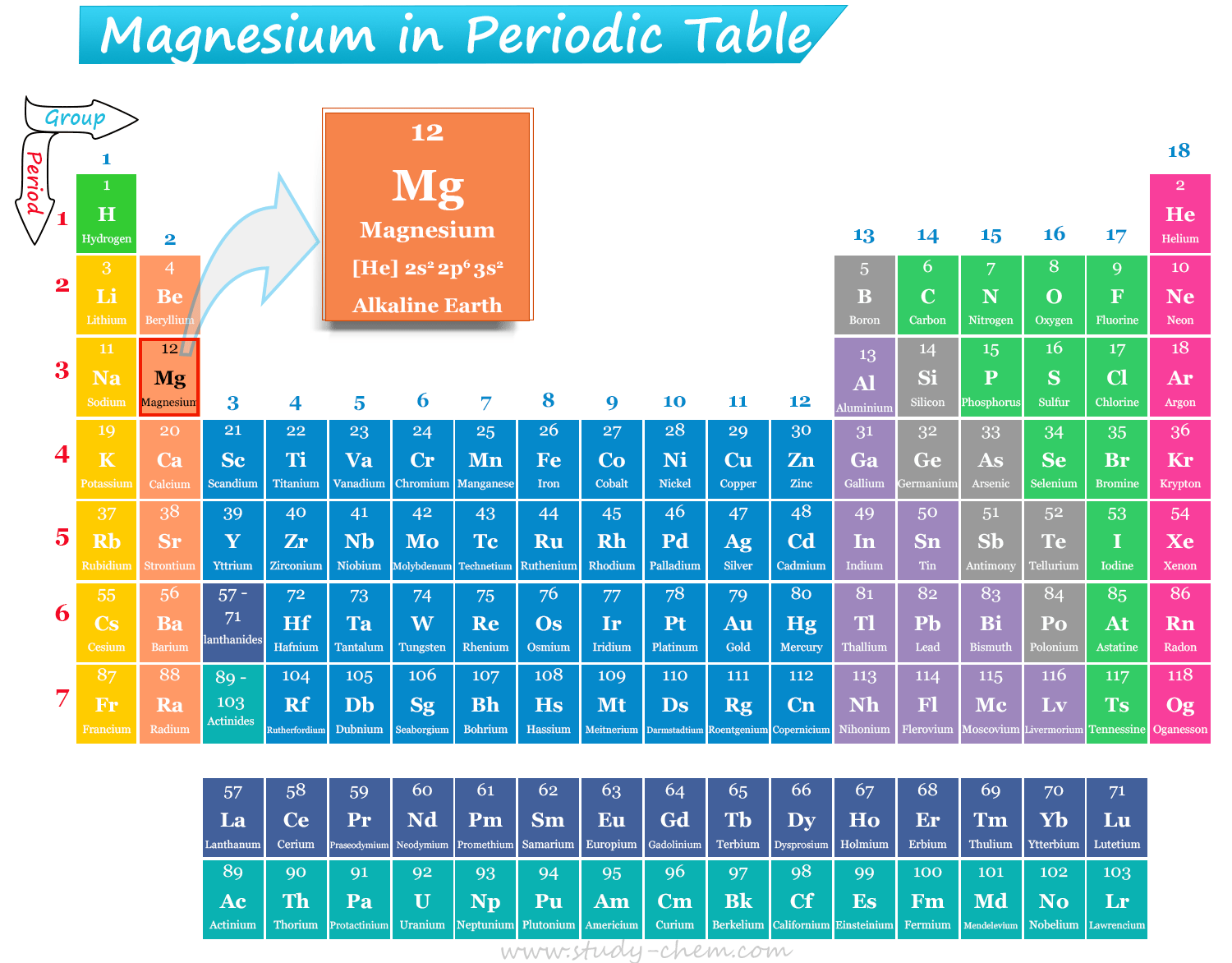
The valence shell electronic configuration of magnesium suggests that it is an s-block element. It is placed after sodium and before aluminium along a period in the periodic table. When placed along a group, it is placed below beryllium and above calcium.
Magnesium is the 12th element, or second member of group 2 or the alkaline earth metal group of the periodic table. Therefore, this metal is placed along with other group 2 elements: beryllium (Be), calcium (Ca), strontium (Sr), barium (Ba), and radium (Ra).
Facts about Magnesium Metal
- The alkaline earth metal magnesium has a relatively higher ionization energy than the alkali metal sodium due to its higher nuclear charge and smaller size. The high value of the third ionization energy is quite expected from the closed shell configuration of Mg+2 ion. It shows that the metal typically exhibits a +2 oxidation state or oxidation number in its compounds.
- Most of the world’s car companies (BMW, Audi, and Ford) use magnesium components for the production of their vehicles.
- Magnesium is also produced in aging stars during a nuclear reaction between three helium nuclei to a carbon nucleus.
- This alkaline earth metal is essential for living organisms and is present widely in chlorophyll of plants and bones of humans.
- Magnesium is a group 2 element in the periodic table that follows the typical s-group chemistry.
Uses of Magnesium Metal
Magnesium is a good alloying agent and the lightest structural metal that is largely used for lightweight construction. It generally offers the best strength-to-weight ratio among common structural metals. A huge quantity of magnesium is produced annually around the world for the production of various lightweight components.
- When alloying with aluminium, zinc, and manganese, it generally improves the mechanical, fabrication, and welding characteristics. Such alloys are very useful for making automobile engines, helicopter transmission housings, engine gearboxes, and missile fins.
- Magnesium is also used with rare earth elements (Pr, Nd) to improve the rigidity and strength of these metals.
- The metal and its alloys are used for making car seats, luggage, laptop enclosures, camera bodies, smartphone frames, and power tools due to their lightweight.
- It is also used for removing sulfur from molten iron and steel.
- Magnesium is used in flares, fireworks, and sparklers because it ignites easily in air and provides a distinctive bright white light.
Uses of Magnesium Compounds
Along with magnesium, the compounds of this alkaline earth metal are used widely in various chemical and pharmaceutical industries. For example, magnesium hydroxide (milk of magnesia), sulfate (Epsom salts), chloride, and citrate are used in medicine. The oxide MgO is also used in cattle feed and for making fertilizers.
- Magnesium sulfate (MgSO4): The sulfate of this metal is used widely in the textile industry as a dyeing agent. It is a good dyeing accelerator, pH regulator, dispersing agent, mordant, softener, and performance enhancer. It is also used for the manufacturing of paper.
- Magnesium hydroxide: The hydroxide form of this metal can suppress smoke and has flame-retardant properties. Therefore, Mg(OH)2 is added to plastics to make them fire-retardant.
- Magnesium oxide (MgO): The oxide form of this metal is used to make bricks for fireplaces and furnaces because MgO has excellent high-temperature resistance, chemical stability, and a high melting point. Therefore, it works for a long time in a high-temperature environment in producing iron, steel, nonferrous metals, glass, and cement.
- Grignard reagents: They are an important chemical compound in organic chemistry for synthesizing various organic molecules. Grignard reagents form when Mg reacts with haloalkenes.
Biological Role
The alkaline earth metal magnesium is an essential chemical element for living beings (plants and animals). The pigment chlorophyll in green plants allows them to capture sunlight during photosynthesis. It is a magnesium-centred porphyrin complex that help for conversion of light energy into chemical energy.
Without Mg-containing chlorophyll, photosynthesis could not occur in green plants and life in the earth atmosphere colud not exist.
Magnesium is an important component for animals and human beings because it plays an important role to working of hundreds of enzymes. A huge amount of Mg is stored in our bodies for making bones and teeth. It is also crucial for DNA synthesis, muscle function, and nerve transmission.
Magnesium for Human Body
An adult body contains about 20 grams of magnesium. However, 70 percent of which found in bones in combination with calcium and phosphorus. The remaining 30 percent is present in the soft tissues and body fluids.
- Magnesium generally required for the formation of bones and teeth.
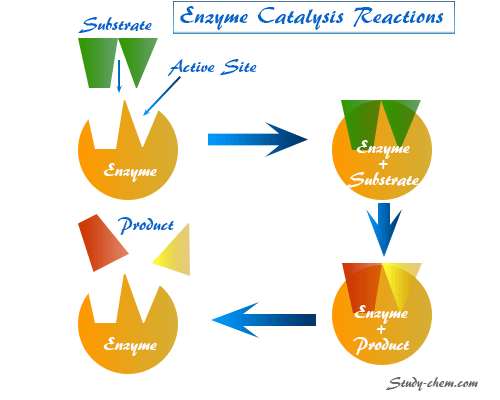
- Mg+2 ion is a cofactor for several enzymes such as hexokinase, glucokinase, phosphofructokinase, adenylate cyclase, etc.
- Mg+2 ion is also necessary for proper neuromuscular function. Therefore, a low level of such ions causes neuromuscular irritability.
Most of the dietary magnesium needed for our body is obtained from cereals, nuts, vegetables (cabbage, cauliflower), meat, milk, and fruits. A deficiency of this alkaline earth metal causes neuromuscular irritation, weakness, and convulsions.
Malnutrition, alcoholism, hyperthyroidism, and cirrhosis of the liver may cause Mg deficiency. However, Mg levels can rise during uncontrolled diabetes and hypothyroidism.