Oxygen Element
Oxygen is the Group 16 chemical element in the periodic table with symbol O and atomic number 8. The molecular form of oxygen (chemical formula O2) is a diatomic colourless, odourless gas that is widely used in the steel industry and the manufacture of various useful chemicals like nitric acid and hydrogen peroxide. The dioxygen molecule is form when two oxygen atoms covalently bind together. Oxygen is the most abundant element in the Earth’s crust and is also vital to the living world. In living organisms, oxygen is a major element of most classes of biomolecules such as proteins, nucleic acids, carbohydrates, and fats. It is also a major constituent of animal shells, teeth, and bone.
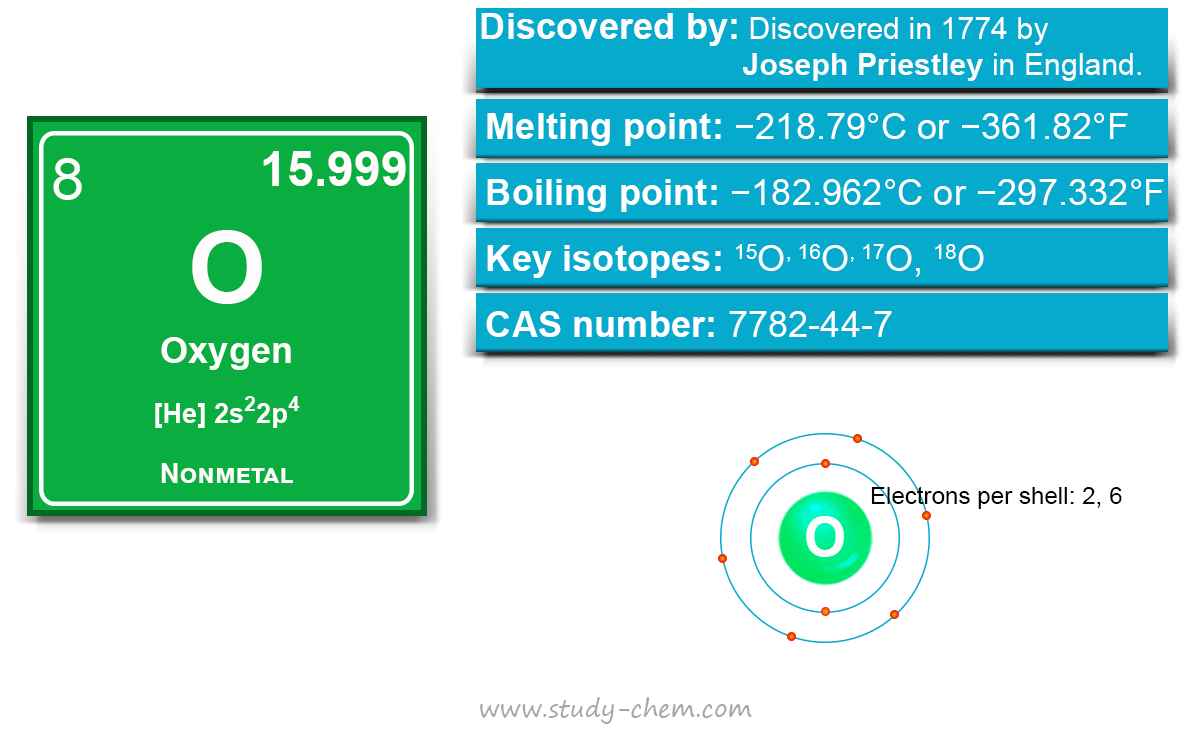
Such a highly reactive nonmetal is a member of Group 16 or the chalcogen group in the periodic table. It is a potent oxidizing agent that readily oxidizes most elements and their compounds. Therefore, it is the most abundant element in the Earth’s crust that makes up almost half of the Earth’s crust. Water, carbon dioxide, iron oxides, and silicates are the most common oxide forms of oxygen present in the Earth’s crust.
Occurence
Oxygen is the most abundant element in the Earth’s crust and uncombined dioxygen is present mainly in air mixed with other gases. It is a major constituent of silica, clay, and various silicate minerals together with some oxides, carbonates, sulfates, etc. It may constitute nearly two-thirds of the mass of the human body.
All the water found in our earth contain oxygen and hydrogen. Therefore, it contributes about 89% by weight to the water in the oceans. Free O2 molecule or dioxygen gas is found mainly in the air of our atmosphere with 20.95% by volume.
The much rarer allotrope, ozone (chemical formula O3) is found mainly in the upper atmosphere to create a protective ozone layer in the lower stratosphere. It generally shields the biosphere from ultraviolet (UV) radiation emitted from the Sun. A small number of ozone molecules is also formed on the Earth’s surface during the corrosion of photochemical smog.
Isotopes of Oxygen
Elemental oxygen has three stable isotopes with their relative atomic mass and abundance are:
| Isotopes | Relative atomic mass (amu) | Abundance (%) |
| 16O | 15.994915 | 99.763 |
| 17O | 16.999134 | 0.037 |
| 18O | 17.999160 | 0.200 |
In kinetic and mechanistic studies, the isotope of this element 18O is used as a tracer. However, 17O can be used in NMR studies.
Many radioactive isotopes with mass numbers from 12 to 24 are also prepared for oxygen. The longest-lived radioactive isotope oxygen is 15O (Half-life = 122.24 seconds) while the shortest lived radioactive isotope is 12O (Half-life = 580 × 10−24 seconds).
Discovery
Cornelius Drebbel in 1608 showed that a gas was released when heating saltpetre or potassium nitrate (KNO3). However, he did not identify that it was oxygen. The credit for discovering the oxygen element is given to the three chemists Joseph Priestley, Carl Wilhelm Scheele and Antoine Lavoisier.
Joseph Priestley was the first to publish his discovery about oxygen in 1774. He produces O2 molecules by focusing sunlight on mercuric oxide (HgO). Priestley also noted that it made our breathing easier and burned a candle more brightly in it. He called oxygen “dephlogisticated air” and did not recognize it as a chemical element.
However, Carl Wilhelm Scheele had produced oxygen in June 1771 but his discovery was not published until 1777.
Antoine Lavoisier in 1777, first recognized that oxygen is a chemical element and it plays a vital role in combustion. The name oxygen element originates from the Greek word ‘oxy genes’, meaning acid forming.
Production of Oxygen Gas
Industrially, oxygen gas (O2) is obtained by two key methods. First is the fractional distillation of liquid air while the second is to pass clean, dry air through a zeolite. In the second method, zeolite may absorb nitrogen and leave oxygen. Pure oxygen may be prepared industrially through a new method by which air is passed over a partially permeable ceramic membrane.
In the laboratory, oxygen gas can be prepared from many chemical compounds and processes. It can be produced during the electrolysis of 30% KOH solution with Ni electrodes.
Cathode: 4H2O (l) + 4e− → 2H2 (g) + 4OH−
Anode: 4OH− (aq) → O2 (g) + 2H2O + 4e−
Overall Reaction: 2H2O (l) → 2H2 + O2
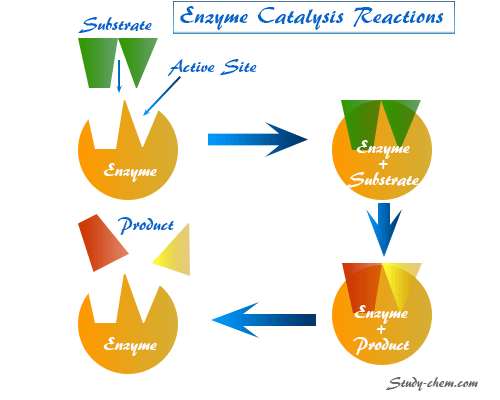
Catalytic decomposition of hydrogen peroxide over platinized nickel foil also forms oxygen. For example, O2 may form when we add a manganese(IV) oxide catalyst to aqueous hydrogen peroxide.
2H2O2 → 2H2O + O2
Thermal decomposition of many compounds gives O2 as a product. For example, thermal decomposition of potassium chlorate (KClO3) at 400° − 500° C forms O2 and KCl.
2KClO3 → 2KCl + 3O2
When we added MnO2 as a catalyst in this reaction, the reaction occurred at 150° C. However, it produces some amount of ClO2.
Thermal decomposition of pure KMnO4 at 215° − 235° C in a vacuum gives very pure O2.
2KMnO4 → K2MnO4 + MnO2 + O2
Properties
The element oxygen occurs in two allotropic forms, dioxygen (O2) and ozone (O3). The highly reactive O2 molecule is formed by the combination of two oxygen atoms through covalent bonding. The molecular orbital diagram showed that it is paramagnetic in nature with two unpaired electrons.
At standard temperature and pressure, dioxygen (molecular formula O2) is a colurless, odourless, highly reactive gas. However, the colour of the liquid oxygen is pale but the solid is blue.
The dioxygen molecule is fairly soluble in water but highly soluble in organic solvents (benzene and acetone). It generally forms weak charge transfer complexes with benzene and acetone.
Discovery and Physical Properties |
|||
| Discovery | Discovered in 1774 by Joseph Priestley in England and independently by Carl Wilhelm Scheele in Sweden. | ||
| Origin of the name | The name originates from the Greek ‘oxy genes’, meaning acid forming. | ||
| Allotropes | O2 (molecule), O3 (ozone molecule) | ||
| CAS number | 7782-44-7 | ||
| Relative atomic mass | 15.999 | ||
| Atomic number | 8 | ||
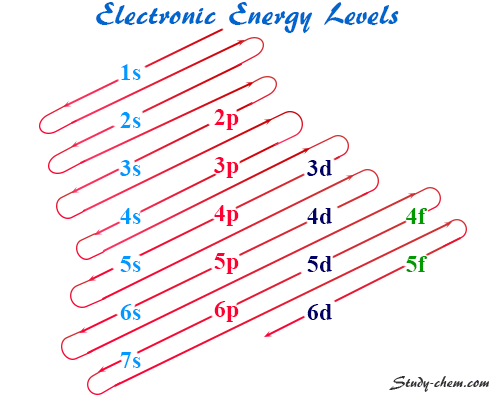
| Electron configuration | [He] 2s2 2p4 | ||
| Periodic position | Group 16, period 2, and block p in the periodic table. | ||
| Melting point | −218.79°C or −361.82°F | ||
| Boiling point | −182.962°C or −297.332°F | ||
| Density (g cm−3) | 0.001308 | ||
| State | Gas at 20°C | ||
| Crystal structure | Cubic | ||
| Key isotopes | 15O (very trace amount) | ||
| 16O (99.8%) | |||
| 17O (0.0384%) | |||
| 18O (0.205%) | |||
| Heat of fusion (N2) | 0.444 kJ/mol | ||
| Heat of vaporisation (N2) | 6.82 kJ/mol | ||
| Molar heat capacity | For O | For O2 | |
| 14.689 J mol−1 K−1 | 29.378 J mol−1 K−1 | ||
| Specific heat capacity | 918.12 J kg−1 K−1 | ||
Chemical Properties |
|||
| ChemSpider ID | 140526 | ||
| Atomic radius, non-bonded (Å) | 1.52 | ||
| Covalent radius (Å) | 0.64 | ||
| Electron affinity (kJ mol−1) | 140.976 | ||
| Electronegativity (Pauling scale) | 3.44 | ||
| Ionisation energies (kJ mol−1) |
1st | 2nd | 3rd |
| 1313.942 | 3388.671 | 5300.47 | |
| Common oxidation states | -1, -2 | ||
| Magnetic ordering | Paramagnetic | ||
Dioxygen is a powerful oxidizing agent and its electrode potential is compared to that of acidified dichromate solution. However, its reaction is often sluggish uder odinary condition due to the high energy of activation needed to carry out the oxidation by dioxygen.
Therefore, a solution of Fe (II) is slowly oxidized by air at standard temperature and pressure. The process is thermodynamically favorable but a high activation energy is required to carry out such oxidation.
The rates of oxidation by oxygen may increase remarkably when transition metal ions act as a catalyst. For example, I− slowly oxidized in solution by air but the rate of reaction is appreciable in the presence of Cu2+ or Fe2+ ions.
Oxygen normally has an oxidation number of −2 but in peroxide and superoxide, the oxidation numbers of this element are −1 and −½ respectively. Fluorine is the most electronegative element in the periodic table, and it always shows an oxidation number of −1. Therefore, in F2O, the oxidation number of oxygen is +2.
Facts About Oxygen
- Oxygen is a highly reactive non-metal or chemical element that belongs to the group of Chalcogens in the periodic table.
- Several chemists had produced oxygen before its discovery but they all failed to identify this element.
- The bond dissociation energy of O2 is high. Therefore, a high-energy activation is required for the dissociation of the O=O chemical bond.
- The dioxygen molecule is fairly soluble in water but highly soluble in organic solvents (benzene and acetone).
- Elemental oxygen is a basic component of all living things (plants and animals).
- This element is produced at the center of stars during the nuclear fusion between carbon-12 and helium-4.
- Too little oxygen can cause difficulty in bathing while too high of this element can increses the flammability of organic compounds.
Position of Oxygen in Periodic Table
The atomic number of oxygen is 8, and the electronic configuration of the element is [He] 2s2 2p4. Therefore, highly reactive nonmetal oxygen is positioned in group 16 and period 2 of the periodic table.
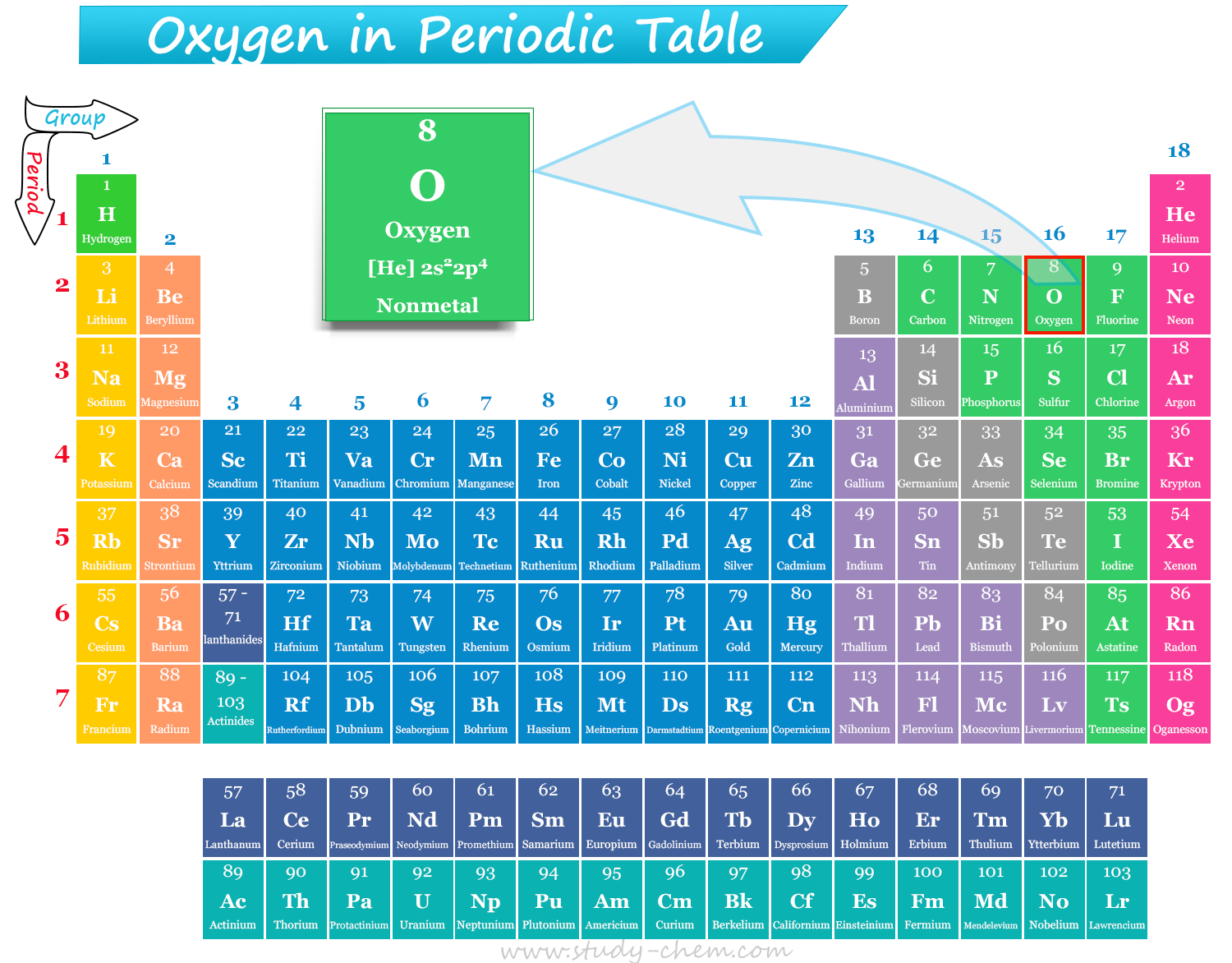
The valence shell electronic configuration of oxygen suggests that it is a p-block element, which is placed after nitrogen and before fluorine in the periodic table. Oxygen is the 8th element, or first member of group 16 or chalcogen group of the periodic table. Therefore, oxygen is placed along with other group 16 elements: Sulfur (S), Selenium (Se), Tellurium (Te), Polonium (Po), and Livermorium (Lv).
Uses of Oxygen
Oxygen is the third chemical in order of use in industry after sulfuric acid and nitrogen. Therefore, it has the greatest commercial importance and uses nearly 100 million tonnes annually throughout the world.
- Commercially, oxygen is used largely in metallurgy for steel making, blast furnaces, and Bessemer converters.
- In the chemical industry, it is used for direct oxidation in many chemical processes. For example, in making synthesis gas, oxidizing ethylene to ethylene oxide.
- Large quantities of dioxygen are also used throughout the world in the manufacture of nitric acid and hydrogen peroxide.
- Liquid oxygen is also used as an oxidizer for the fuels in rocket propulsion.
- Oxygen gas is also widely used in oxy-acetylene welding and metal cutting.
- The use of this element is also growing because it is used for the treatment of sewage and of effluent from industry.
- In the hospital, it is used in pediatric incubators to help the breathing of premature newborn babies.
- Astronauts, submariners, and scuba divers also use artificially delivered oxygen for their breathing.
Biological Role of Oxygen
Elemental oxygen is a basic component of all living things (plants and animals). This element makes up nearly two-thirds of the mass of the human body. In living organisms, oxygen is a major element of most classes of biomolecules such as proteins, nucleic acids, carbohydrates, and fats. It is also a major component of animal shells, teeth, and bone.
This element first appeared 2 billion years ago during the photosynthesis of cyanobacteria. During photosynthesis, the energy from the sun is used to split water into oxygen and hydrogen. O2 produced in this process passes into the atmosphere but H2 joins with carbon dioxide to form a glucose molecule.
6CO2 + 6H2O + Enery from Sunlight → C6H12O6 + 6O2
Living things generally take dioxygen for their respiration or the production of energy from food. The O2 molecule intake for respiration returns to the atmosphere in the form of carbon dioxide.
Oxygen gas is also needed for aerobic life in rivers, lakes and oceans. Such aerobic life is possible because it is fairly soluble in water.