Nitrogen Element
Nitrogen is a group 15 element in the periodic table with symbol N and atomic number 7. Dinitrogen exists in the form of a colurless diatomic gas with molecular formula N2. The nonmetal nitrogen is the fifth most abundant chemical element in the Earth’s crust and nitrogen gas constitutes about 78% of the air. Dinitrogen present in the Earth’s atmosphere is generally extracted from the liquefied air through fractional distillation.
The element nitrogen is an essential constituent of the living system. It occurs in the form of amino acids, proteins, nucleic acids (DNA and RNA), and adenosine triphosphate (ATP). The chemistry of the element is similarly interesting because the remarkable tendency of catenation observed in carbon generally disappears in nitrogen.
Aboundence
The nonmetal nitrogen is the fifth most abundant element in the Earth’s crust and its gaseous form constitutes about 78% of the air. Therefore, plenty of dinitrogen is generally found in the air mixed with other gases.
The natural abundance of the nitrogen element in rocks and soils is remarkably low. Therefore, only a few nitrogenous minerals are found in the Earth’s crust. These are nitre or saltpetre (KNO3) and Chile saltpetre (NaNO3).
Such minerals formed via nitric acid resulting from the action of nitrifying bacteria on vegetable and animal remains. They are leached by water into the subsoil. During the rainy season, such salts reascend to the surface by capillary action.
Therefore, large quantities of nitre are left as saline efflorescence on the surface of the soil together with other salts. Major deposits of nitre are present mostly in Bolivia, Italy, Spain, and Russia. However, the deposits containing only NaNO3 are found in Chile.
Naturally occurring elemental nitrogen contains mainly the 14N isotope. However, 15N also occurs slightly in nature. The ratio of the relative abundance of these two isotopes is 14N/15N = 272:1. The isotope 15N may be prepared by an exchange reaction between NO and NO3−.
15NO (g) + 14NO3− (aq) → 14NO (g) + 15NO3− (aq)
Discovery of Nitrogen
During the early days, Swedish chemist Carl Wilhelm Scheele showed that air is a mixture of two gases. One of which he called “fire air” and another is “foul air”. The first one generally helps in combustion and the second one was left after the use of fire air. Therefore, the first element was oxygen and the second one element was nitrogen.
However, at the same time (in 1972) nitrogen was discovered by a Scottish botanist, Daniel Rutherford and independently by Carl Wilhelm Scheele, Henry Cavendish, and Joseph Priestley. The French chemist Jean-Antoine-Claude Chaptal in 1790 gave the name of this element nitrogen.
Production of Nitrogen
Nitrogen is generally produced in a laboratory and industrially by various chemical processes. However, laboratory production processes have little utility except for academic purposes.
Production in the Laboratory
Nitrogen can be produced in the laboratory by a variety of chemical reactions. For example, concentrated solution ammonium nitrite ( NH4NO2) can slowly decompose to form nitrogen and water. Some NO and HNO3 also formed and they must be removed by absorbents like potassium dichromate (K2Cr2O7) in the presence of sulfuric acid (H2SO4).
NH4NO2 → N2 + 2H2O
Ammonium nitrite is very unstable. Therefore, a concentrated solution containing sodium nitrite (NaNO2) and ammonium chloride (NH4Cl) is used for the production of ammonium nitrite (NH4NO2).
When sodium or barium azide is heated, it converts into N2 and Na or Ba.
2NaN3 → N2 + 2H2O
Similarly, heating ammonium dichromate produces N2, Cr2O3, and H2O in the reaction vessels.
(NH4)2Cr2O7 → N2 + Cr2O3 + 4H2O
Such a reaction accompanied by sparks and is also used as a model for an artificial volcano in a popular science exhibition.
When CuO is heated with excess ammonia, N2 is formed along with Cu and H2O. Excess ammonia is used to suppress the formation of explosive NCl3.
3CuO + 2NH3 → 3Cu + N2 + 3H2O
Similarly, chlorine (Cl2) or bleaching powder, Ca(OCl)Cl, reacts with ammonia at room temperature to form N2 gas.
3Cl2 + 8NH3 (aq) → N2 + 6NH4Cl
3Ca(OCl)Cl + 2NH3 → 3CaCl2 + 3H2O + N2
Industrial Production
Large amounts of nitrogen can be produced industrially as a byproduct during the isolation of oxygen by fractional distillation of liquid air. Dinitrogen boils off before oxygen because the boiling point of N2 is lower than that of O2. The product generally contains some amount of argon.
A large scale of dinitrogen can also be produced by burning carbon and hydrocarbons present in the air. The resulting carbon dioxide and water can be removed from the gas mixture by fractional distillation.
Properties
Nitrogen (symbol N) is a group 15 element or nonmetal that exists in the form of a colorless diatomic gas with the molecular formula N2.
Discovery and Physical Properties |
|||
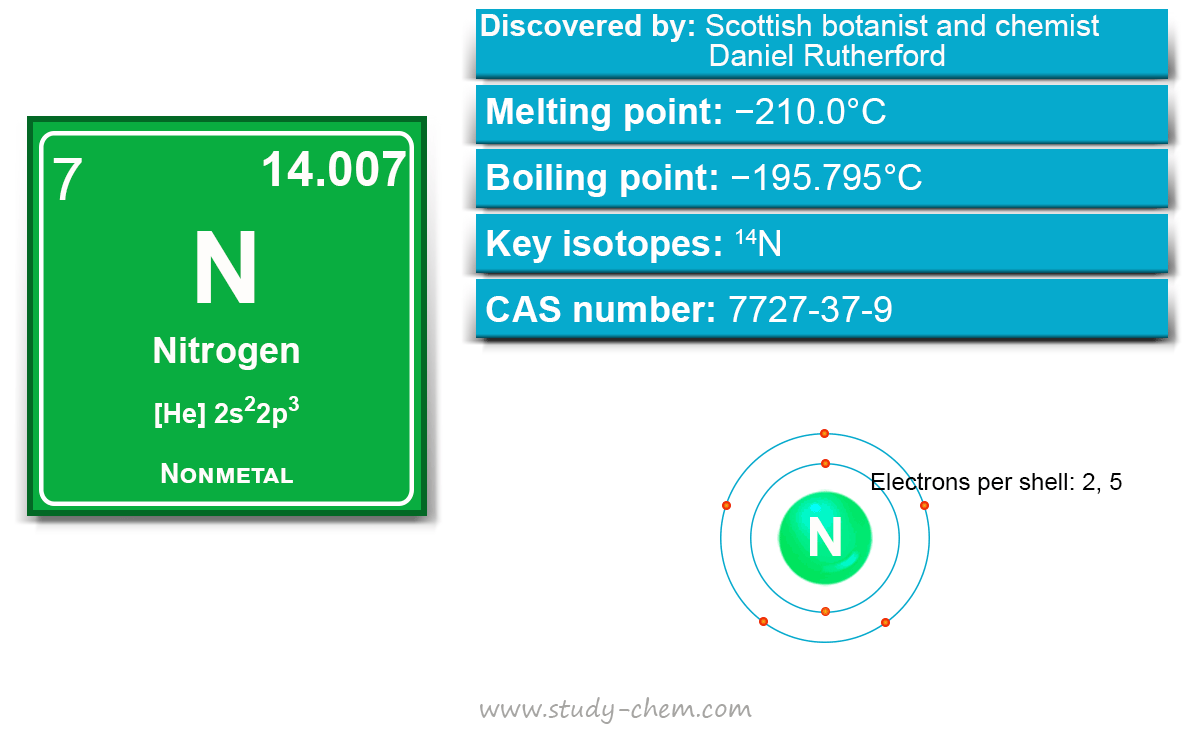
| Discovery | Discovered in 1772 by the Scottish botanist and chemist Daniel Rutherford. | ||
| Origin of the name | The name of the nitrogen element is derived from the Greek ‘nitron’ and ‘genes’ meaning nitre forming. | ||
| Allotropes | Molecular N2 | ||
| CAS number | 7727-37-9 | ||
| Relative atomic mass | 14.007 | ||
| Atomic number | 7 | ||
| Electron configuration | [He] 2s2 2p3 | ||
| Periodic position | Group 15, period 2, and block p in the periodic table. | ||
| Melting point | −210.0°C or −346.0°F | ||
| Boiling point | −195.795°C or −320.431°F | ||
| Density (g cm−3) | 0.001145 | ||
| State | Gas at 20°C | ||
| Crystal structure | Hexagonal | ||
| Key isotopes | 14N | ||
| Heat of fusion (N2) | 0.72 kJ/mol | ||
| Heat of vaporisation (N2) | 5.57 kJ/mol | ||
| Molar heat capacity | For N | For N2 | |
| 14.562 J mol−1 K−1 | 29.124 J mol−1 K−1 | ||
| Specific heat capacity | 039.623 J kg−1 K−1 | ||
Chemical Properties |
|||
| ChemSpider ID | 20473555 | ||
| Atomic radius, non-bonded (Å) | 1.55 | ||
| Covalent radius (Å) | 0.71 | ||
| Electron affinity (kJ mol−1) | Not stable | ||
| Electronegativity (Pauling scale) | 3.04 | ||
| Ionisation energies (kJ mol−1) |
1st | 2nd | 3rd |
| 1402.328 | 2856.092 | 4578.156 | |
| Common oxidation states | 5, 4, 3, 2, -3 | ||
| Magnetic ordering | Diamagnetic | ||
Dinitrogen is almost insoluble in water and incombustible and non-supporter of combustion. Dinitrogen is generally unreactive at room temperature for the following reasons:
- High bond energy for the N≡N chemical bond.
- A large difference between the HOMO and LUMO in the dinitrogen (N2) molecule.
- Symmetrical electron distribution makes the molecule nonpolar.
Chemical Reactions
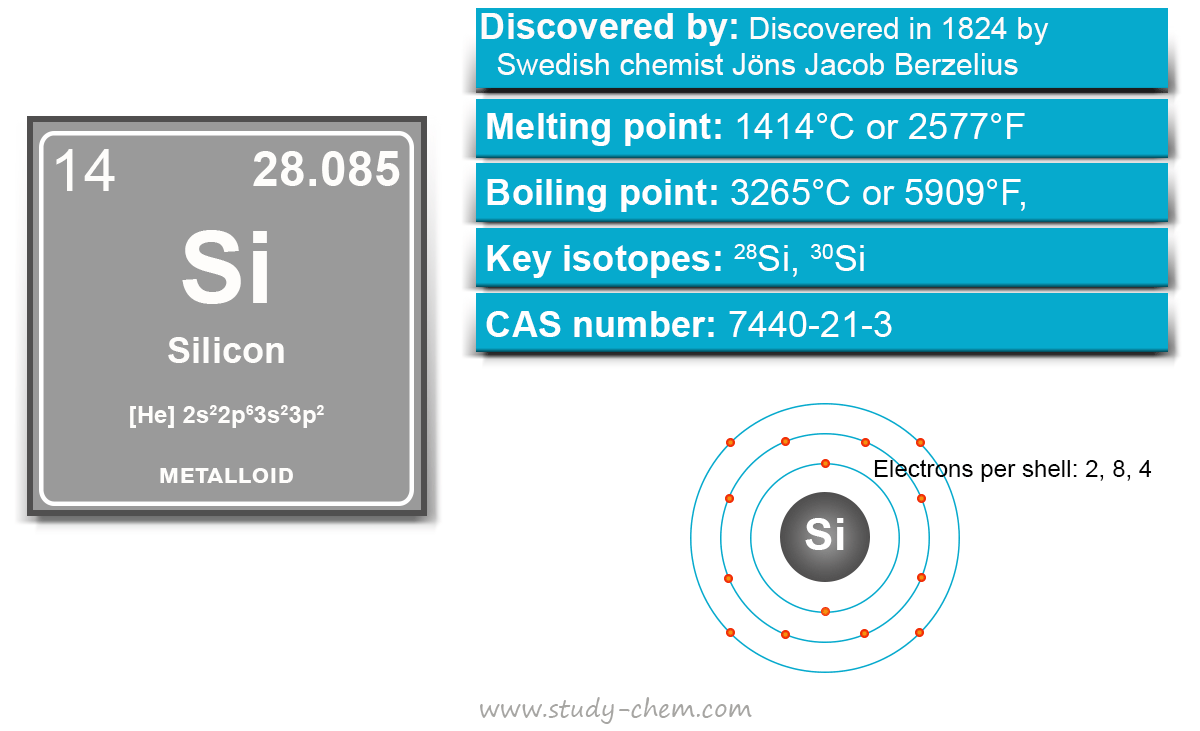
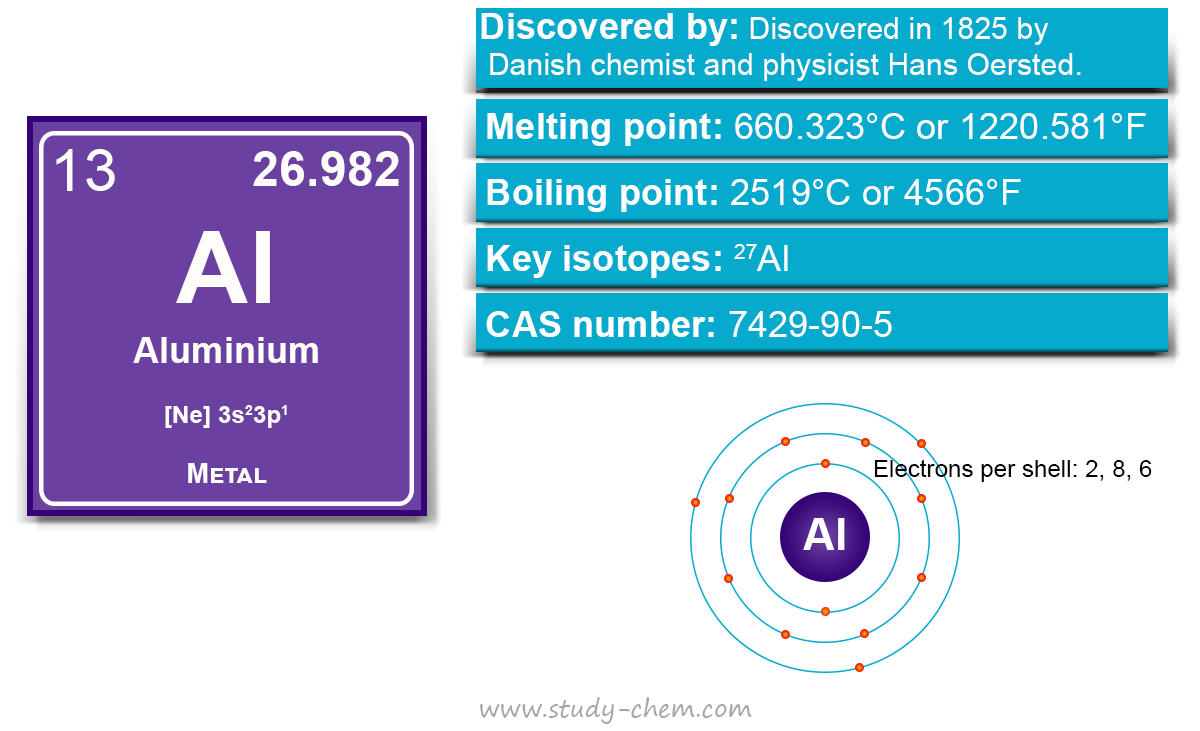
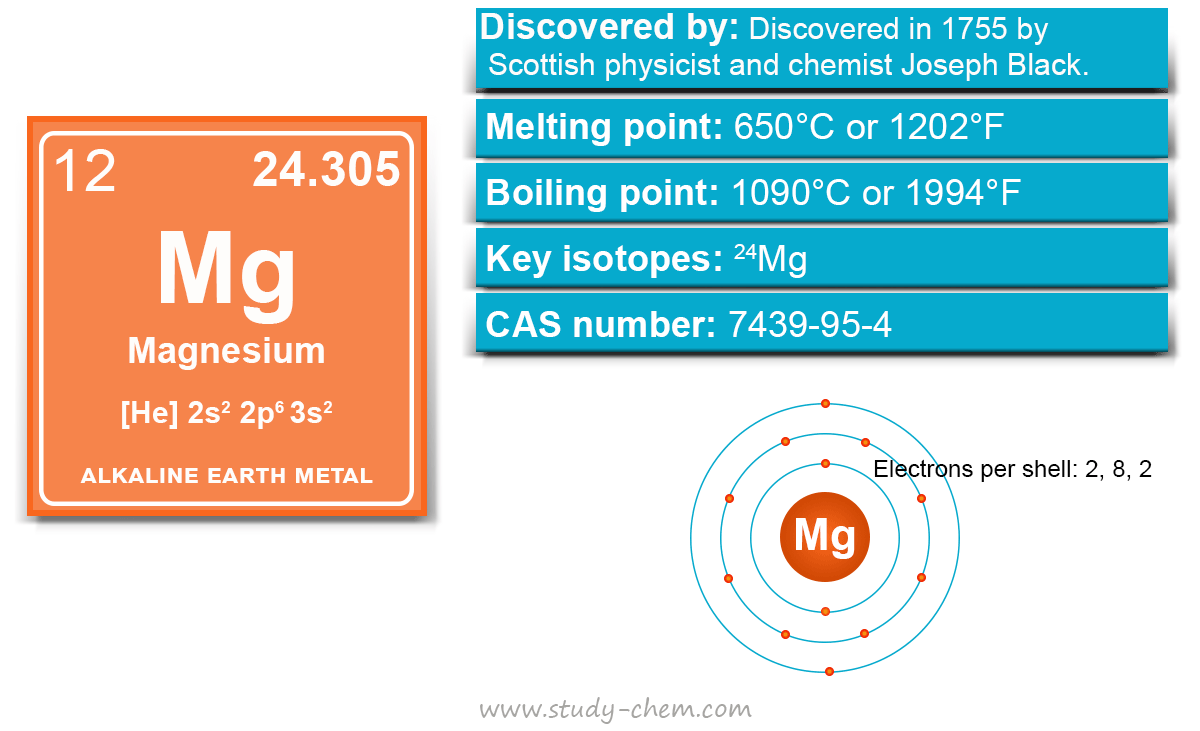
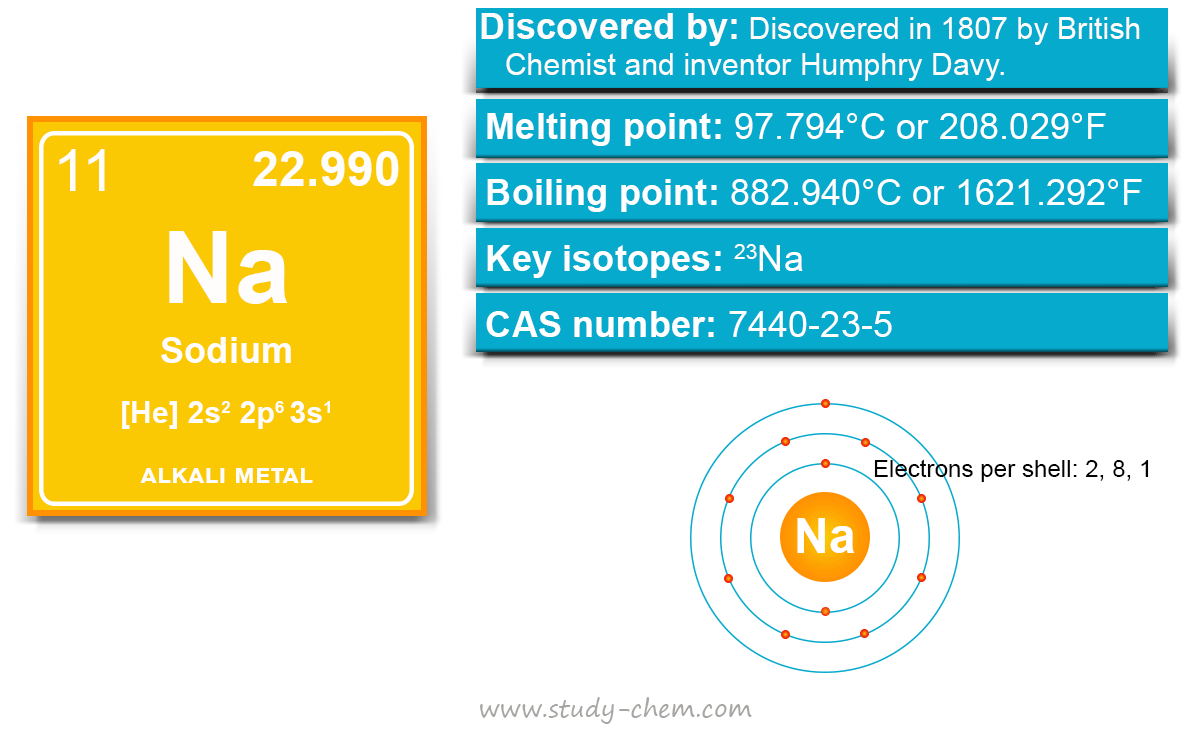
Dinitrogen reacts slowly at room temperature with lithium, while at elevated temperatures with Be, Mg, Ca, Sr, Ba, Al, as well as B, Si, and Ge to form nitrides.
It combines with hydrogen under pressure and in the presence of a catalyst to form ammonia.
Position of Nitrogen in Periodic Table
The atomic number of nitrogen is 7, and the electronic configuration of the element is [He] 2s2 2p3. Therefore, nonmetal nitrogen is positioned in group 15 and period 2 of the periodic table.
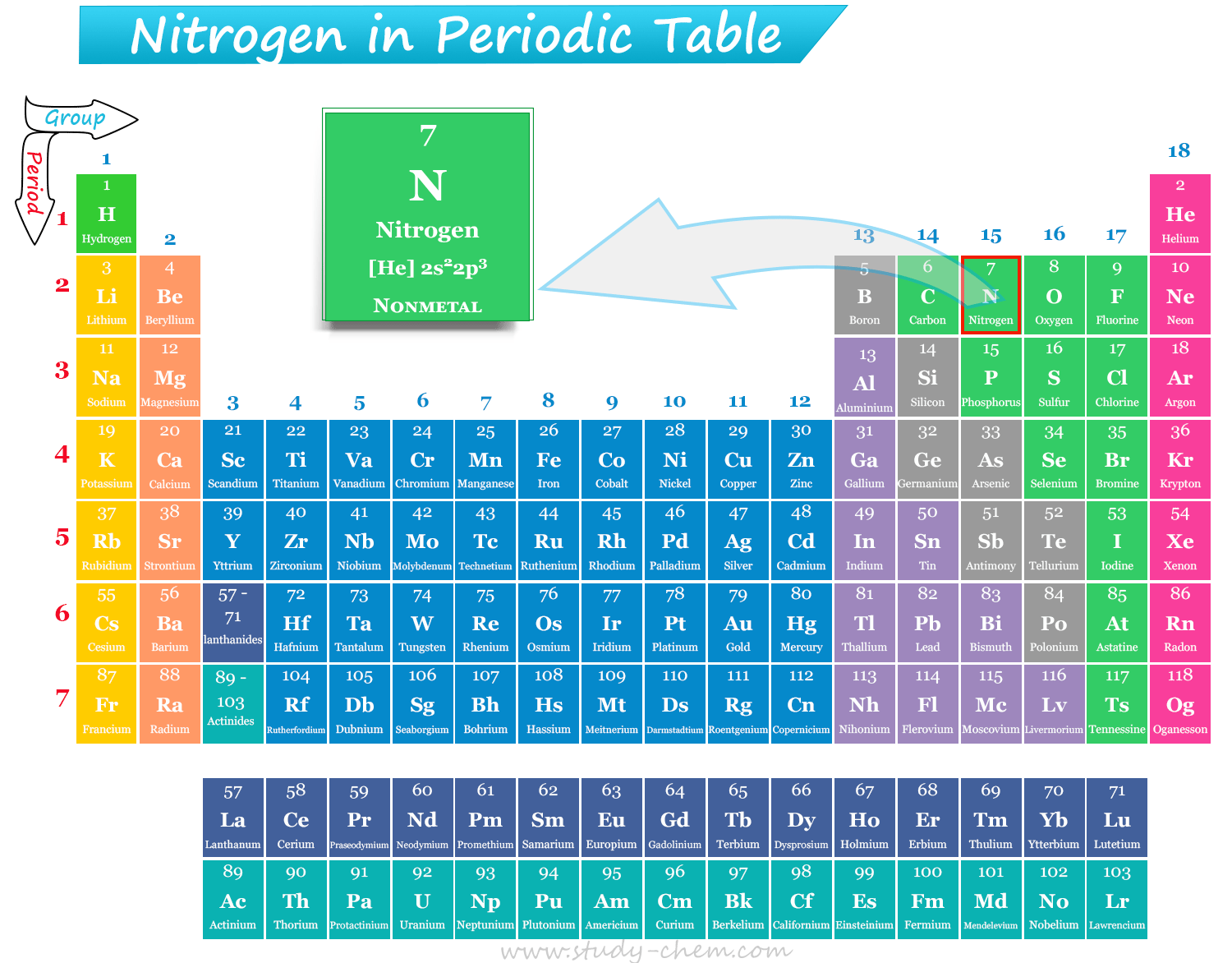
The valence shell electronic configuration of nitrogen suggests that it is a p-block element, which is placed after carbon and before oxygen in the periodic table.
Nitrogen is the 7th element, or first member of group 15 of the periodic table. Therefore, nitrogen is placed along with other group 15 elements: Phosphorus (P), Arsenic (As), Antimony (Sb), Bismuth (Bi), and Moscovium (Mc).
Facts About Nitrogen
- The nonmetal nitrogen is the lightest member of group 15 or pnictogens in the periodic table.
- The compounds of such element are relatively rare due to the volatile nature of solid nitrogenous compounds.
- Molecular nitrogen is a colourless, odourless, tasteless gas that is present plentifully in the air of our atmosphere but is very inert for chemical reactions.
Uses of Nitrogen
- Elemental nitrogen is an important chemical constituent of fertilisers, nitric acid, nylon, dyes, and explosives. Therefore, it is used widely in fertilizer, chemical and petrochemical industries.
- For the production of various such chemicals, nitrogen gas must be converted into ammonia by the Haber process.
- Dinitrogen (N2) is also used to create an inert atmosphere. Such an inert atmosphere is used for the preservation of food items and also the production of transistors and diodes in the electronics industry.
- A huge amount of dinitrogen can be used for annealing stainless steel and other steel products in metallurgy.
- Liquid nitrogen is a useful refrigerant that is used for storing sperm, eggs, and various cells for biological research and DNA technology.
- Liquid N2 is also used in low-temperature machining and grinding of rubbers and rubber-like substances.
- It is used for rapidly freezing foods, helping them to maintain moisture, colour, flavour, and texture.
- A large amount of dinitrogen is generally used for the production of ammonia and calcium cyanamide.
The Nitrogen Cycle
The continuous interchange of nitrogen between the atmosphere and biosphere is called the nitrogen cycle. The nitrogen required for the growth of living organisms (plants and animals) comes to the soil in the following ways:
- Most of the dinitrogen input in the soil is caused by nitrifying bacteria like Rhizobium, Azotobacter, and Clostridium pastorianum. They mostly convert dinitrogen into nitrates or ammonium nitrates. Rhizobium is the most important in this class and it lives in the nodules or roots of certain plants (Leguminosae, pea, bean, etc).
- Artificial fixation of nitrogen by using nitrogenous fertilizers helps to meet the growing need for nitrogen element in soil for the production of food for an ever-increasing population.
- Lightning in the upper atmosphere may also fix the nitrogen element into the soil. It leads to the formation of NO and NO2 and is carried during rain as HNO3.
To balance dinitrogen in the atmosphere, it returns to the atmosphere by the following process:
- During the death and decay of plants and animals, together with animal excretions returns most of the nitrogen into the soil. Most of this escapes into our atmosphere as ammonia. However, a considerable portion is converted to N2, N2O, or NH3 by various nitrifying bacteria.
- Burning of wood, coal, and petroleum also releases a small amount of nitrogen oxides to our atmosphere.
- Drainage of surface water may carry some amount of nitrogen into the sea. It helps to support marine life. However, a part of this is ultimately deposited into the sea beds.
Biological Role of Nitrogen
Nitrogen is the fourth most abundant element in the body that occurs in the form of amino acids, proteins, nucleic acids (DNA and RNA), and adenosine triphosphate (ATP). Dietary protein is almost an exclusive source of nitrogen in the human body. Therefore, nitogen containg amino acids are the key building blocks of proteins.
Nitrogen is the most important element that is a major component of chlorophyll and various other pigments needed for photosynthesis. Therefore, it is a very important nutrient for plant growth and production.
Although dinitrogen is the most abundant element in the air but plants can utilize reduced forms of this element. Plants acquire nitrogen by:
- During the addition of ammonia or nitrate fertilizer or manure to cultivated soil.
- Nitrogen containiing compounds during organic matter decomposition.
- During the conversion of atmospheric N2 gas into the acurable nitrogen containing compounds by natural processes such as lightning and biological nitrogen fixation by nitrifying bacteria.