Silicon Element
Silicon is a metalloid or chemical element of group 14 in the periodic table with the symbol Si and atomic number 14. The nonmetallic chemical element silicon is a part of the carbon family in the periodic table. It has many physical and chemical similarities with carbon because they are in the same group of the periodic table. Elemental silicon is a hard, dark gray solid with a metallic lustre. It commonly forms an octahedral crystalline diamond-like structure. However, an amorphous form of silicon has a microcrystalline structure.
Highly purified elemental silicon plays an important role in modern technology and the world economy because it uses for making semiconductors, transistors, and integrated circuit uses wdiely in smartphones and other computers.
The lower bond energy in crystalline silicon makes it lower melting, softer, and chemically more reactive than diamond. Elemental form has been commercially produced in an electric furnace by the reduction of silica (SiO2) with coke.
Occurrence
Silicon is the 14th element, or second member of group 2 or the carbon group of the periodic table. Therefore, this metalloid placed along with other group 14 elements: Carbon (C), Germanium (Ge), Tin (Sn), Lead (Pb), and Flerovium (Fl).
Silicon is the second most abundant chemical element after oxygen that forms 27.7 percent of Earth’s crust but it is not found free. This element has a high affinity for oxygen and forms the stable SiO4 unit. The SiO4 unit generally combines with one another in a number of ways to give a wide variety of silicates.
Silicon dioxide (SiO2), or silica, and silicates occur widely in sands, clays, and various silicate minerals.
Silicon has three stable isotopes: 28Si (92.23%), 29Si (4.67%), and 30Si (3.10%). 29Si has a nuclear spin quantum number = ½ and uses in NMR studies.
31Si generally obtained by neutron irradiation of 30Si. It emits beta rays with a half-life of 2.6 hours. 32Si is also a beta emitter with a half-life of 650 years.
Discovery of Silicon
An impure form of this element had been obtained in 1811, while the crystalline form of this element was not prepared until 1854.
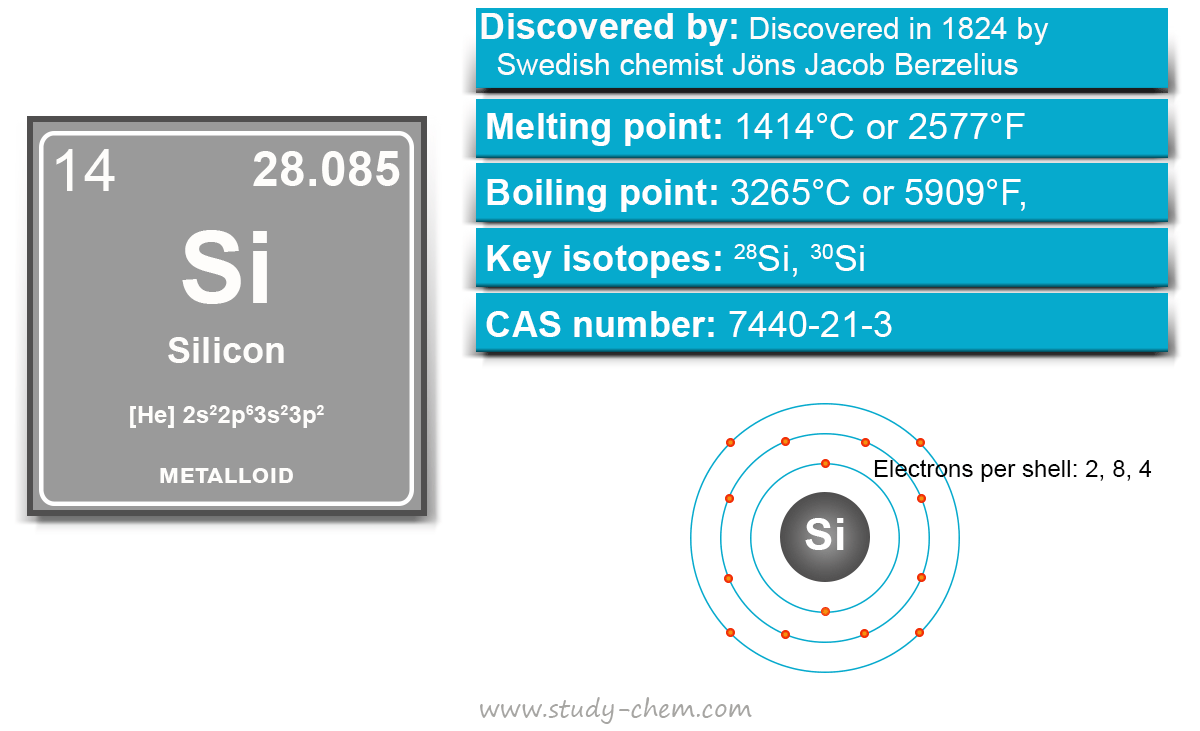
Elemental silicon was first isolated and described by Swedish chemist Jöns Jacob Berzelius in 1824. The name of this amorphous element silicon, originates from the Latin word silex or silicis, meaning “flint” or “hard stone.”
Isolation of Silicon
Silicon is prepared by reducing sand (SiO2) with high-purity coke in an electric ARC furnace. Formation of silicon carbide (SiC) is prevented basically by using an excess of SiO2.
SiO2 + 2C → Si + 2CO
The product obtained by this process is nearly 96 to 97% pure. Therefore, this can be purified by converting it to SiCl4 and distillation subsequiently reduced by magnesium and zinc.
Si + 2Cl2 = SiCl4
SiCl4 + 2Mg = Si + 2MgCl2
Superpure Silicon
Superpure form of this element suitable for the electronics industry produces generally by subjecting pure silicon to zone refining.
- The spongy Si element obtained during reduction of SiCl4 is melted and grown into a cylindrical rod.
- The rod is placed in a quartz tube filled with an inert gas. It is surrounded by a ring-like heating coil which can be moved from one end of the rod to another.
- When the heater melts one part of the rod, impurities dissove more in the liquid phase.
- As the heating coil is slowly moved, impurities are carried along with the molten zone and pure silicon basically crystallizes from the melt. Therefore, the impurities are transported with the melt to one end, which is cut off and discarded.
However, ultrapure silicon can be obtained during thermal decomposition of SiI4/H2 on a hot tungsten filament or reduction of Na2SiF6 by sodium.
Na2SiF6 + 4Na → Si + 6NaF
Properties
Silicon crystallizes in the diamond form with the Si−Si distance = 235 pm. However, a denser distorted form may be produced at high pressure, but the Si−Si distance remains unchanged.
Discovery and Physical Properties |
|||
| Discovery | Discovered in 1824 by Swedish chemist Jöns Jacob Berzelius | ||
| Origin of the name | The name originates from the Latin word ‘silex’ or ‘silicis’, meaning flint. | ||
| Allotropes | Amorphous Si, crystalline Si | ||
| CAS number | 7440-21-3 | ||
| Relative atomic mass | 28.085 | ||
| Atomic number | 14 | ||
| Electron configuration | [He] 2s² 2p⁶ 3s² | ||
| Periodic position | Group 14, period 3, and block p in the periodic table. | ||
| Melting point | 1414°C or 2577°F | ||
| Boiling point | 3265°C or 5909°F | ||
| Density (g cm−3) | 2.3296 | ||
| State | Solid at 20°C | ||
| Crystal structure | Face-centered diamond-cubic (cF8) | ||
| Key isotopes | 28Si, 30Si | ||
| Thermal conductivity | 149 W/(m⋅K) | ||
| Electrical Conductivity | 22.4 × 10⁶ S/m | ||
| Molar heat capacity | 19.789 J mol−1 K−1 | ||
| Specific heat capacity | 704.611 J kg−1 K−1 | ||
| Thermal expansion | 2.556×10⁻⁶/K at 20 °C | ||
| Heat of fusion | 50.21 kJ/mol | ||
| Heat of vaporization | 383 kJ/mol | ||
| Van der Waals radius (Å) | 2.10 | ||
Chemical Properties |
|||
| ChemSpider ID | 4574465 | ||
| Atomic radius, non-bonded (Å) | 2.10 | ||
| Covalent radius (Å) | 1.14 | ||
| Electron affinity (kJ mol−1) | 134.068 | ||
| Electronegativity (Pauling scale) | 190 | ||
| Ionisation energies (kJ mol−1) |
1st | 2nd | 3rd |
| 786.518 | 1577.134 | 3231.585 | |
| Common oxidation states | +4, −4 | ||
| Magnetic ordering | Diamagnetic | ||
Chemical Reactivity
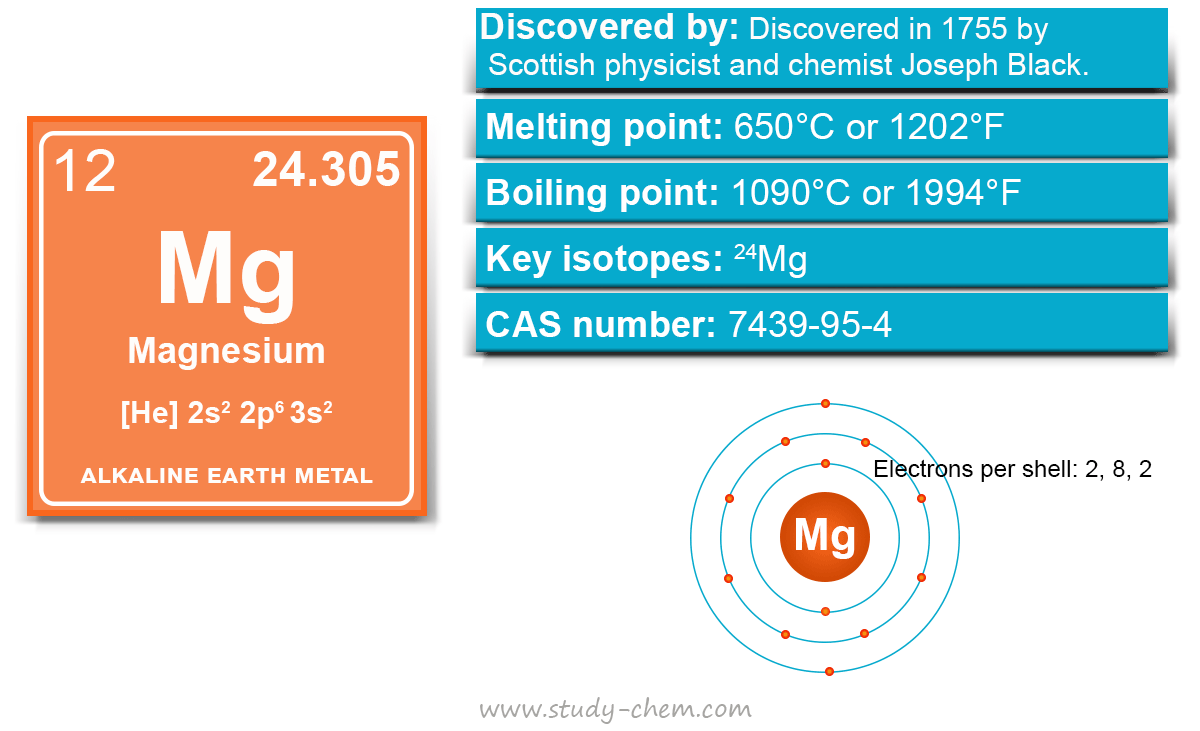
The chemical reactivity of silicon is generally examined in the +4 state. Acid hydrolysis of magnesium silicide (Mg2Si) gives a mixture of hydrides (SiH2, Si2H6, Si3H8, Si4H10). They are then separated and purified by fractional distillation.
The electronegativity difference between silicon and oxygen is much larger than that between carbon and oxygen. Therefore, bonds in silica have considerable ionic character and lead to the formation of a three-dimensional infinite structure in SiO2 and silicates.
This periodic table element generally forms covalent tetrahalides with a tetrahedral structure (sp3 hybridization). However, all the tetrahalides of Si are readily hydrolyzed.
Position of Silicon in Periodic Table
The atomic number of silicon is 14, and the electronic configuration of the element is [He] 2s² 2p⁶ 3s² 3p². Therefore, metalloid silicon is positioned in group 14 and period 3 of the periodic table.
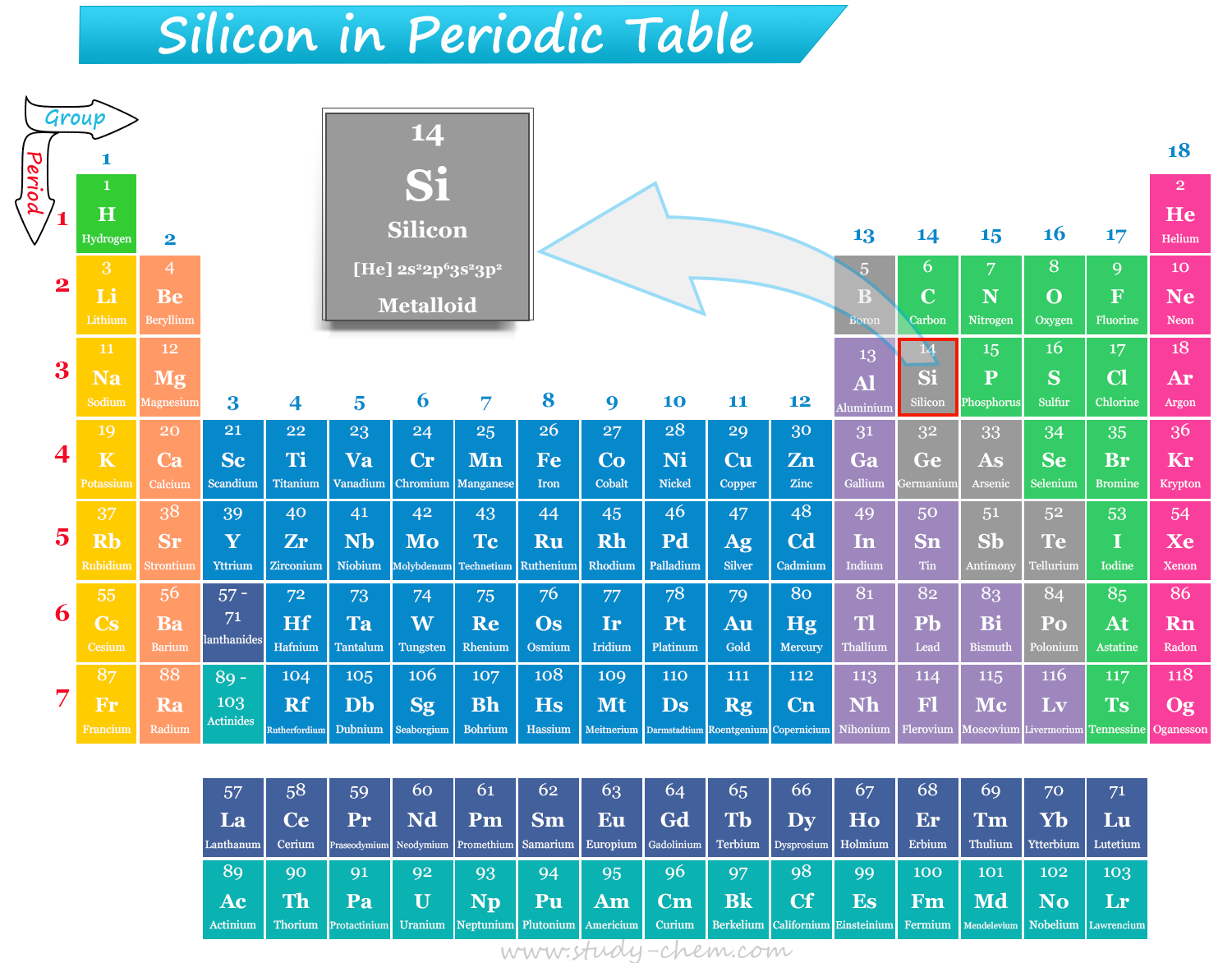
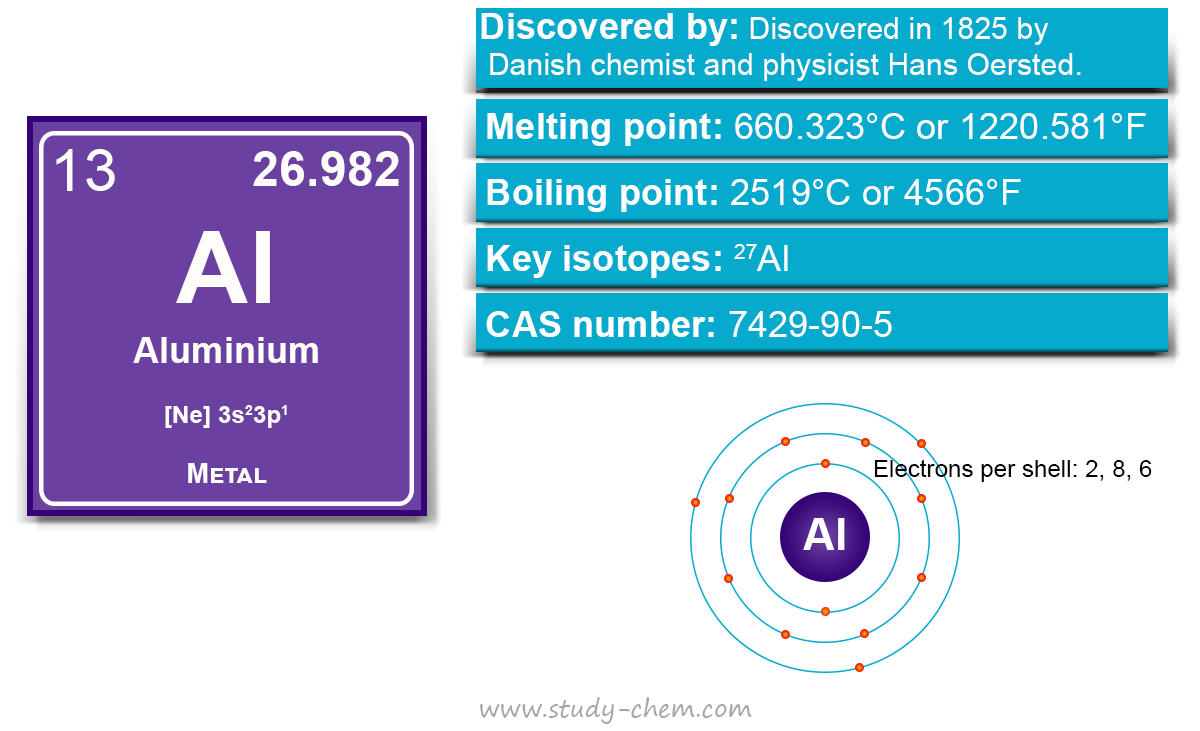
The valence shell electronic configuration of silicon suggests that it is a p-block element. It is placed after aluminium and before phosphorus along a period in the periodic table. When placed along a group, it is placed below carbon and above calcium.
Silicon is the 14th element, or the second member of group 14 or the carbon group of the periodic table. Therefore, this lightweight nonmetal is placed along with other group 14 elements: carbon (C), germanium (Ge), tin (Sn), lead (Pb), and flerovium (Fl).
Facts about Silicon
- Silicon is the second most commonest periodic table element in the Earth’s crust after oxygen and occurs in nature abundantly as various silicate minerals and also as silica.
- The unique feature of all silicate minerals is due to the tetrahedral coordination of Si by O.
- A highly used alloy of Fe and Si (ferrosilicon) in the steel industry is prepared by reducing SiO2 with coke in the presence of scrap iron.
- Silicon forms important semiconductor materials when doped with elements of group 13 and group 15.
- This periodic table element also has a diamond type crystal lattice but a lower melting point than carbon due to its larger size and weaker bond energy.
- Carbon and silicon have strong affinities for oxygen and fluorine. Therefore, they form a large number of compounds like carbonates, silicates, fluorosilicates, etc.
Uses of Silicon
Silicon is an important periodic table element that plays an important role in modern life. This element is mostly used for making alloys and semiconductors.
Various forms of silicates have also been used extensively in daily life and industry. Such silicates are made up of SiO4 units sharing corners to form rings, chains, sheets, and 3-dimensional cavities which generally act as molecular sieves like Zeolites.
Ultra-pure elemental silicon plays an important role in modern technology and the world economy because it uses for making semiconductors. In modern day, silicon semiconductors uses in various electrical devices such as transistors, solar cells, and integrated circuits.
To control the electrical properties, silicon is generally doped with tiny amounts of boron, aluminium, gallium, phosphorus, or arsenic. This element becomes a p-type semiconductor when doped with a group 13 element (boron, aluminium, or gallium) and an n-type semiconductor when doped with a group 15 element (phosphorus or arsenic).
Silicon is one of the most useful alloying and steel-making materials used basically for producing Al-Si and ferrosilicon (Fe-Si). These Si-based alloys uses widely for making dynamo and transformer plates, engine blocks, cylinder heads, machine tools, etc.
In steel making, it uses as a deoxidizer. Therefore, steels with high silicon content have corrosion-resistant properties.
Analytical Reaction of Silicon
This periodic table element is determined gravimetrically as SiO2. In qualitative detection, a silicon compound is generally treated with hydrofluoric acid (HF) to produce volatile SiF4.
SiO2 + 4HF → SiF4 + 2H2O
SiF4 gives turbidity in water due to the formation of silicic acid (H2SiF6) and silica (SiO2).
3SiF4 + 2H2O → SiO2 + 2H2SiF6
Biological Role of Silicon
Silicon does not play any biological role in animals but is essential for plant life. This periodic table element is non-toxic but some silicates are carcinogenic in nature.
High inhalation of siliceous dust generally causes a serious lung disease called silicosis. It mostly develops in workers like miners and stonecutters.